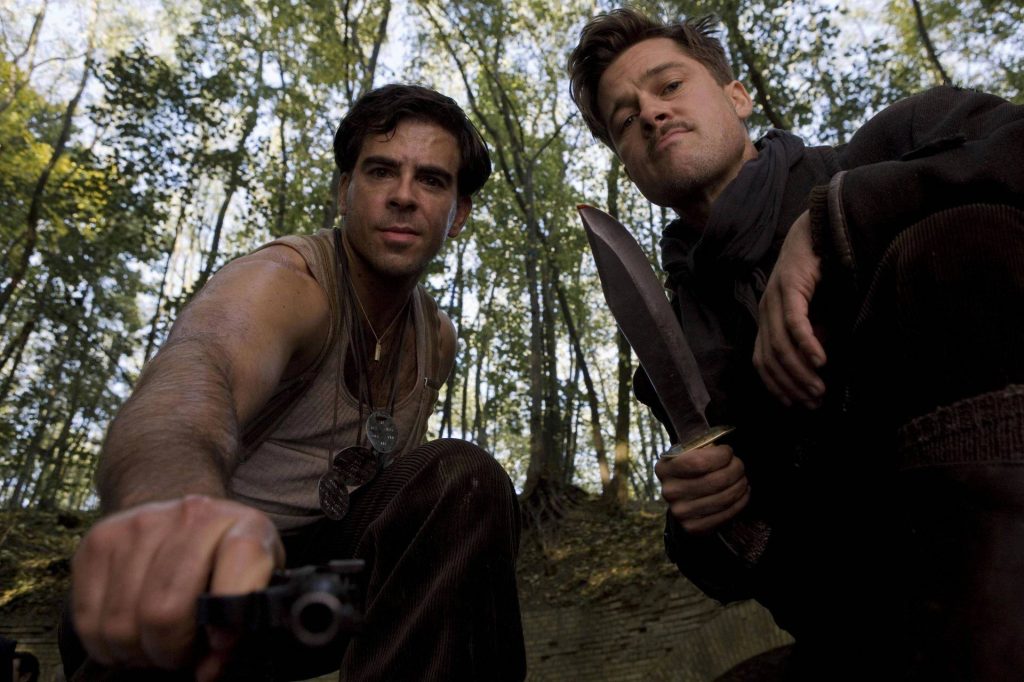
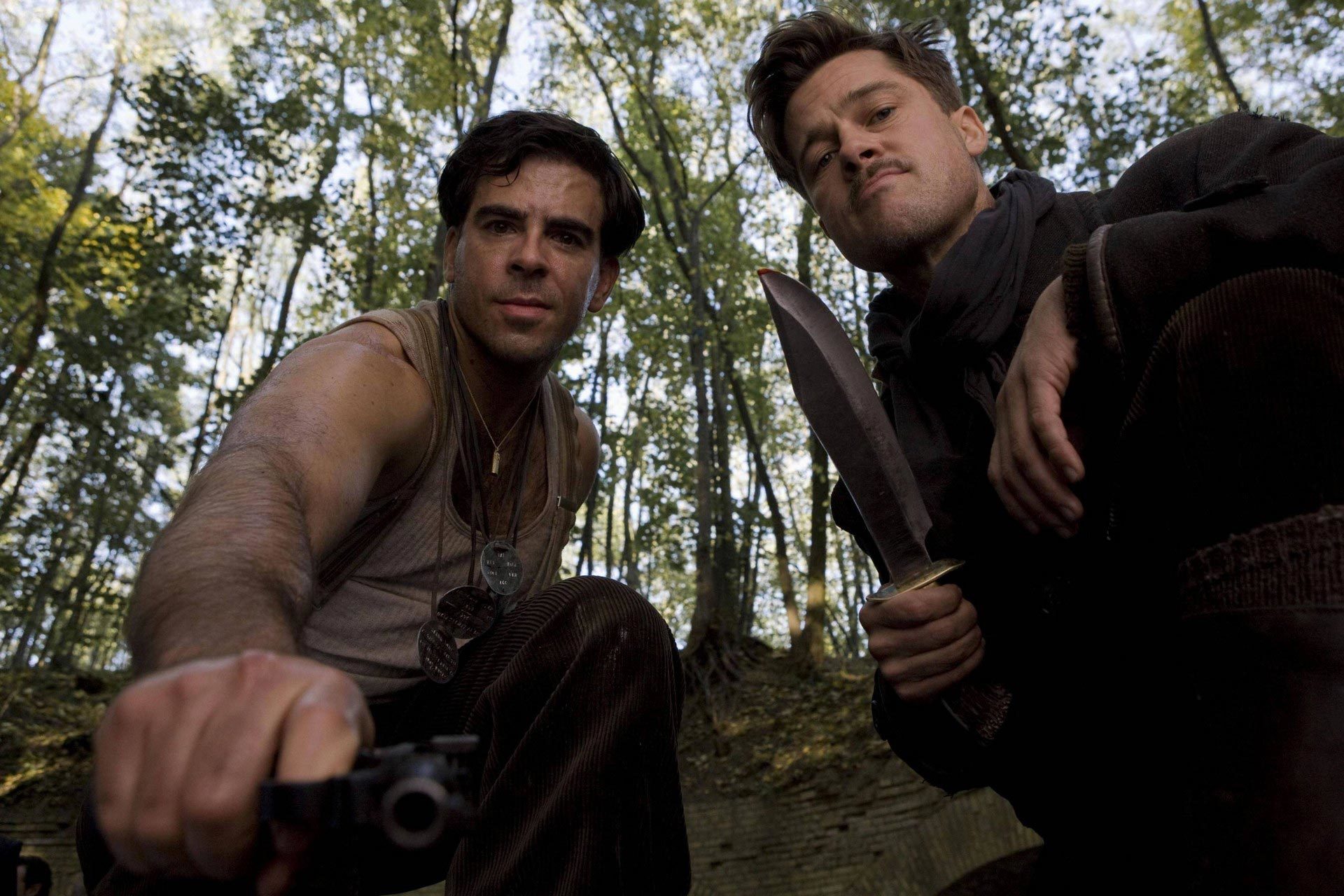
I had the pleasure of watching America’s number-one movie Inglourious Basterds this morning and I was not disappointed. Written and directed by Quentin Tarantino, who borrowed the name and skeletal storyline from the 1981 army film starring Fred Williamson, Inglourious…, has just saved us from a less-than-stellar summer movie lineup.
The movie starts in the first year of the German occupation of France, Shosanna Dreyfus (a Jewish refugee played by Melanie Laurent) witnesses the execution of her family at the hand of Nazi Colonel Hans Landa (Christoph Waltz). Shosanna narrowly escapes and flees to Paris where she forges a new identity as the owner and operator of a cinema.
Elsewhere in Europe, Lieutenant Aldo Raine (played by a jestful Southern Brad Pitt) organizes a group of Jewish American soldiers to hunt down kill and scalp Nazi soldiers. Later known to their enemy as “the basterds,” Raine’s squad joins German actress and undercover agent Bridget von Hammersmark (Diane Kruger) on a mission to take down the leaders of the Third Reich. Fates converge under a cinema marquis, where Shosanna is poised to carry out a revenge plan of her own
I love Tarantino because he never seems concerned with following the rules about how movies should be. He defies convention to create films entirely his own. I loved Inglourious Basterds, not because everyone else did, but because it raises uncomfortable questions.
I found myself thinking about the audience’s (and my own) reactions. Yes, we’re watching the enemy die, but the cheers that erupt as these men (the byproducts of Hitler’s regime) are killed in the most brutal ways felt worth examining. It’s crazy how easily we can set aside our sense of empathy under the right circumstances.
Like: maybe you don’t believe in the death penalty, until someone you love is murdered. In Inglourious Basterds, the revenge is justified by the trauma that preceded it. The characters are hunting down monsters, and in doing so, they become monsters too, but we’re still rooting for them.
Ultimately, Tarantino gives us a story of revenge, moral ambiguity, and catharsis. One where history is flipped on its head, and the audience cheers for violence as long as it’s pointed at the right people.
It takes a truly singular filmmaker to reimagine one of history’s darkest chapters and make it feel both thrilling and thought-provoking. Thanks, Tarantino, for always pushing the envelope.
 Danger Bowie
Leave a comment