Sinners is hands down one of my favorite films of the decade. I’ve already watched it twice (in IMAX 70mm and Dolby 🙌🏾), and then went down a rabbit hole of research to catch all the details I may have missed, which I’ll lay out here.
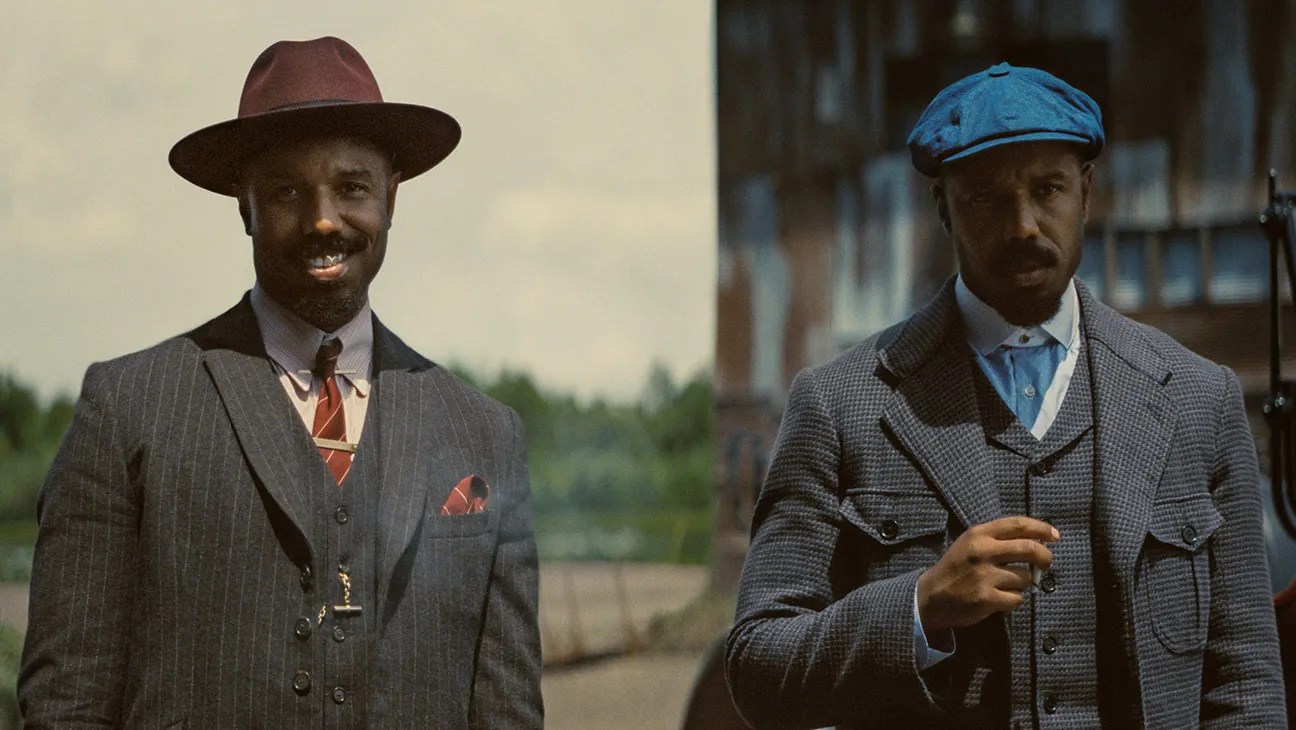
Set in 1932, Ryan Coogler’s genre-bending blockbuster follows notorious twin brothers, Smoke and Stack, who return to their hometown of Clarksdale, Mississippi, to open a juke joint at a sawmill they’ve just bought. In need of a big act to draw in a sizeable crowd, they reconnect with their musical genius cousin, Sammie, whose unique musical gift can summon both light and darkness.
As the Smokestack twins build their crew to launch the club, they rekindle old flames, but their plans are soon threatened by a supernatural visitor with terrifying motives.
Because post-viewing research deep dives are my favorite thing ever—and Coogler packed this film with more layers than a chocolate cake from Cheesecake Factory—I had a good-ass time scouring TikTok, film reviews, interviews with the cast, essays and more digging up all the juicy details.
Update: Now that Sinners is streaming on HBO Max, I’ve put together a follow-up piece with 9 more hidden details and Easter eggs — from vampiric reflections to that unsettling empty crib in Bert and Joan’s house.
Check it out here: Sinners on HBO Max: 9 Hidden Details You Might’ve Missed
And warning: Spoilers ahead!
1. The Surreal Musical Montage at the Juke Was Filmed in One Day

The surreal montage at Club Juke, where Sammie calls forth ancestral spirits from both the past and future, took months of rehearsal to perfect. But the electrifying sequence was filmed in just one day(!) and captured in a single, uninterrupted shot known as a “oner” or “one shot.”
The scene is sensory overload in the best way. A funky Bootsy Collins-esque guitarist shreds on electric guitar, a griot conjures ghost notes from a proto-banjo, a DJ cuts in with an ‘80s beat, and dancers from Asia, Africa and the US do their thing, including a Peking opera performer, a ballerina, a twerker and a Zaouli dancer.
There’s so much happening, you almost forget to breathe. It brought me back to the ’90s, when movies were spectacles and you left the theater feeling like you’d just witnessed something big.
It’s a celebration and a cultural cipher all at once. And I have a feeling that film students will be dissecting this scene (and Oppenheimer’s Trinity sequence) for decades to come.
2. Twin Consultants Helped MBJ Shape His Dual Roles

Playing identical twins with distinct personalities while acting against yourself is one of the most challenging performances an actor can take on. The timing, coordination, chemistry with yourself, emotional range and doing double the work? It’s not for the faint of heart.
Luckily, Michael B Jordan had the full support of Ryan Coogler, who comes from a family with many sets of twins and has close friends from Oakland, Logan and Noah Miller, who are twins themselves. He brought them on as consultants for the film, sitting down with them to discuss their experiences and using their feedback to adjust the blocking and script.
In a Breakfast Club interview, Coogler recalled asking Logan and Noah why they always sat next to each other: was it for his sake or theirs? Turns out they were trying to soothe the Black Panther director. Apparently, people get freaked out seeing them apart in the same room.
Coogler incorporated this insight into the film, in the scene where the twins meet Hogwood to buy the sawmill/slaughterhouse. While one twin talks, the other sneaks up behind Hogwood with a bag of money to scare him.
3. Actor Percy Bell Helped Bring the Smokestack Twins to Life as a Body Double

While Michael B Jordan had to pull double duty, he couldn’t actually act alongside himself in every scene. In order to pull off this illusion, they needed someone with acting skills and a similar build to bring the twins to life.
And hot damn, Percy Bell was a perfect option. Coogler spoke highly of Bell and his contributions during his Breakfast Club interview, but thanks to the seamless CGI, it was so hard to spot him in action. (Though, he is also credited as Incarcerated Worker #1, which I’m assuming is referring to one of the members of the chain gang?)
4. Delroy Improvised the Musical Moment in the Chain Gang Scene

In one of the most heart-wrenching and powerful moments in Sinners, Delroy Lindo’s scene-stealing, liquor-loving bluesman Delta Slim teaches Sammie how to conjure the blues—through pain, memory and spirit.
On the road to the juke joint, Stack drives past a chain gang, and Delta calls out to the men, telling them to keep their heads up.
He then reveals to Stack and Sammie that those prisoners were once gifted musicians he played with—men who were framed for heinous crimes and condemned to the brutal system of convict leasing. One of them, he says, was lynched in the process. As Delta recounts the story, we hear the chilling audio of the events he’s describing.
As the weight of the memory overtakes him, Delta begins to hum a slow, aching and raw tune. In that moment, grief becomes melody, and the blues is born, right before our eyes.
The scene is so aligned with the story’s emotional core that I assumed it had to be scripted. But no, Delroy Lindo revealed that he improvised that humming. The man deserves his flowers for this role and so many others.
5. This Real Town in the Bayou Was Smoke’s Vision for Sammie’s Future

Smoke steps into a mentor role with Sammie, trying to shield him from the temptations that come with the music scene—the late nights, the liquor, the ego. He doesn’t see the juke joint as salvation, but as a trap. Instead, he pushes Sammie to leave Clarksdale and take his gift somewhere it can truly grow.
Smoke may be hotheaded and intense, but he’s a fierce protector of those he loves, including his cousin. Dressed in blue throughout the film, he’s almost like the angel on Sammie’s shoulder. His twin, Stack, clad in red, is the devilish counterpoint who teaches the preacher boy about matters of the flesh. The two brothers don’t just offer advice; they represent two very different paths.
At a tense moment in the club, Smoke urges Sammie toward something, somewhere, deeper. He tells him about a real place tucked away in the bayou: Mound Bayou, Mississippi.
Founded in 1887 by formerly enslaved foundational Black Americans, Mound Bayou was a self-sustaining, all-Black town built on freedom and resilience. For decades, it thrived with its own hospital, schools, banks and government—an extraordinary act of Black autonomy in the heart of the Jim Crow South. It still exists today, one of the last of its kind.
6. The Candyman Connection

Sixty years after the wildest night of their lives, Vampire Stack, rocking a Coogi and the Gumby, and Mary pay a late-night visit to an aging Sammie at his Chicago blues bar, Pearline’s (named after the woman who tragically sacrificed herself for him that fateful night). The date? October 16, 1992—same day the iconic Black horror film Candyman was released.
Like much of Sinners, this connection is layered: Candyman is set in Chicago, just like Pearline’s. It’s also the city where the Smokestack twins once hustled Irish and Italian mobsters out of fortunes in booze and cash. More than that, Candyman marked a turning point in horror; it brought Black folklore and trauma into the mainstream, just as Sinnersdoes in its own genre-bending way. Both films center on haunted legacies, tragic love, and the ghosts we carry…sometimes literally.
There’s also a poster on the bar wall advertising Sammie’s upcoming performance on Saturday, November 1. Stack implies Sammie won’t be around much longer, which makes me wonder: Does Sammie die on All Saints’ Day?
7. Coogler Took Inspiration From a Metallica Song

Coogler’s vision for Sinners was wild from the jump and the music had to match. He told the San Francisco Chronicle that he wanted the movie to feel like a Delta blues song in its soul, but with the chaos and inevitability of a Metallica track. Specifically, “One.”
“I wanted the movie to have the simplicity—and simultaneously, the profound nature—of a Delta blues song. But I wanted it to have the contrast, variation, and the inevitability of a great Metallica song, like ‘One,’” he said. “It starts off with almost like an easy-listening solo, you know what I’m saying? And then it just goes bats*** insane, in a way you could have never seen coming—and at the same time, it felt like it was going there all along. The movie’s basically that.”
And the Metallica connection doesn’t stop there—Lars Ulrich himself hopped on the drums for the score. Ludwig Göransson, Coogler’s go-to composer and Oscar-winning musical genius, cooked up something rich and layered: a soundscape that starts in the mud with soft, swampy blues and slowly builds until it absolutely rips the roof off.
8. Head to Spotify For Some Backstory on the Twins and Remmick

On Spotify’s official Sinners page, there’s a hidden gem of lore about Remmick and the twins tucked away in the “About Me” section. Scroll through the carousel of images that we’re shown at the start of the film, and you’ll land on a trio of intriguing newspaper clippings.
One details a turf war between the Italian mafia and Irish mob over missing liquor, which is how our sneaky pair of Mississippi twins wound up with Irish beer and fancy Italian liquor. Another features a bank robbery carried out by two masked men, explaining where they got their cash. And the final clipping details a chilling 1911 shipwreck off Ireland, a likely nod to Remmick’s own Voyage of the Demeter to America. I love this type of marketing, where we learn in-world details from unexpected sources.
There are like tons of other Easter eggs that I can’t cover because this article would be dozens of pages long. Which one was your favorite?


Leave a Reply