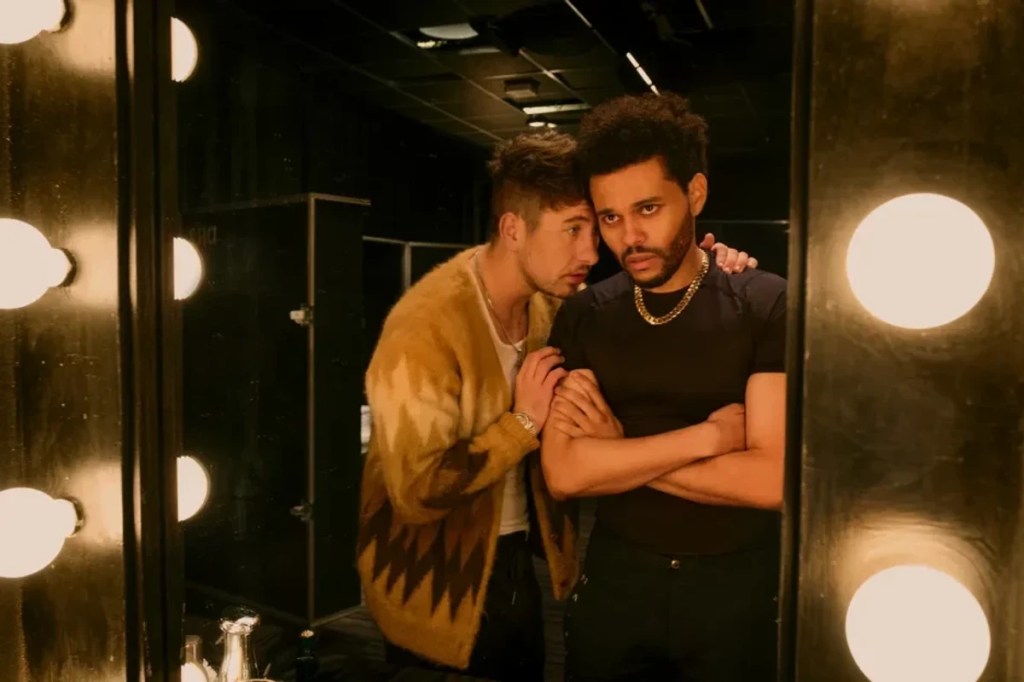
In Hurry Up Tomorrow, Abel Tesfaye takes one of his most devastating public moments and turns it into a trippy identity spiral. The psycho-thriller-musical-meta-drama follows a fictionalized Tesfaye in the wake of that real-life meltdown, when he was booed offstage by tens of thousands of fans after losing his voice at the start of a 2022 concert.
But there was nothing wrong with his vocal cords. The loss was psychological, and it changed everything.
“I’m going through a cathartic path right now,” Tesfaye said in a 2023 Variety interview. “It’s getting to a place and a time where I’m getting ready to close the Weeknd chapter. I’ll still make music, maybe as Abel, maybe as the Weeknd. But I still want to kill the Weeknd. And I will. Eventually. I’m definitely trying to shed that skin and be reborn.”
And boom, Hurry Up Tomorrow was born. Tesfaye spins the nightmare concert incident into something more surreal: a meta reckoning with fame and the pop persona that made him a global icon.
With a minimal cast and Tesfaye in nearly every scene, the film rests on his shoulders, for better or worse.

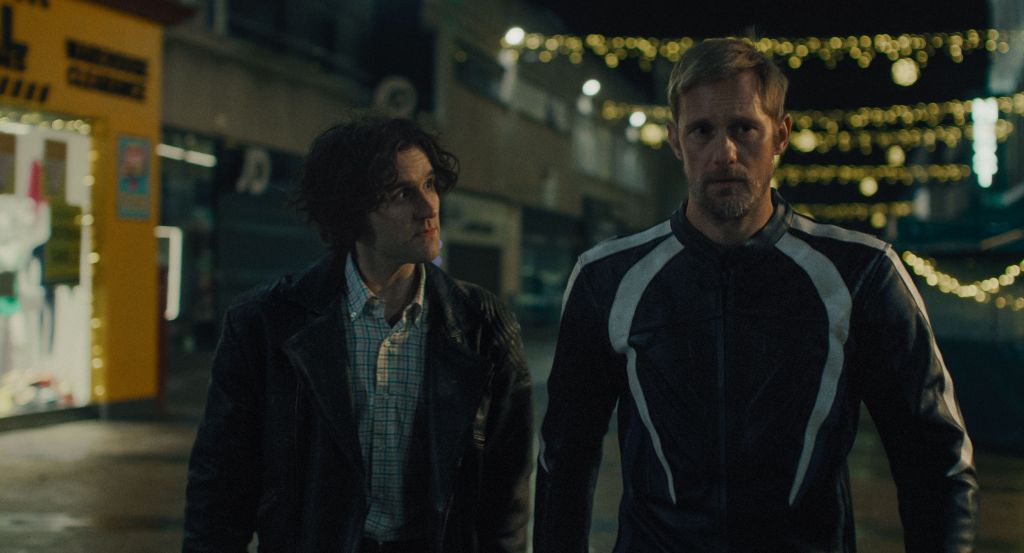
Saltburn’s Barry Keoghan holds his own as Lee, Tesfaye’s longtime friend and manager. He’s manic and destructive, much like the old sex-obsessed, coke-encrusted Weeknd from the Trilogy and After Hours era. He’s less a character than an echo, pulling Abel back toward the darker instincts that made him famous.
Problem is, the average viewer won’t make this connection, and without it, things get confusing real quick. (I scoured Reddit to connect some dots, and it was illuminating.)
Then there’s Jenna Ortega, playing Anima (her name means “soul,” big wink), a deranged fan-turned-love interest, in a performance at least partially inspired by Kathy Bates in Misery and Patrick Bateman. But underneath the violence and obsession, Anima is a symbolic character who represents the feminine part of Abel’s psyche. All she wants is for him to acknowledge the pain that haunts him, confront his past and move on to a healthier future.
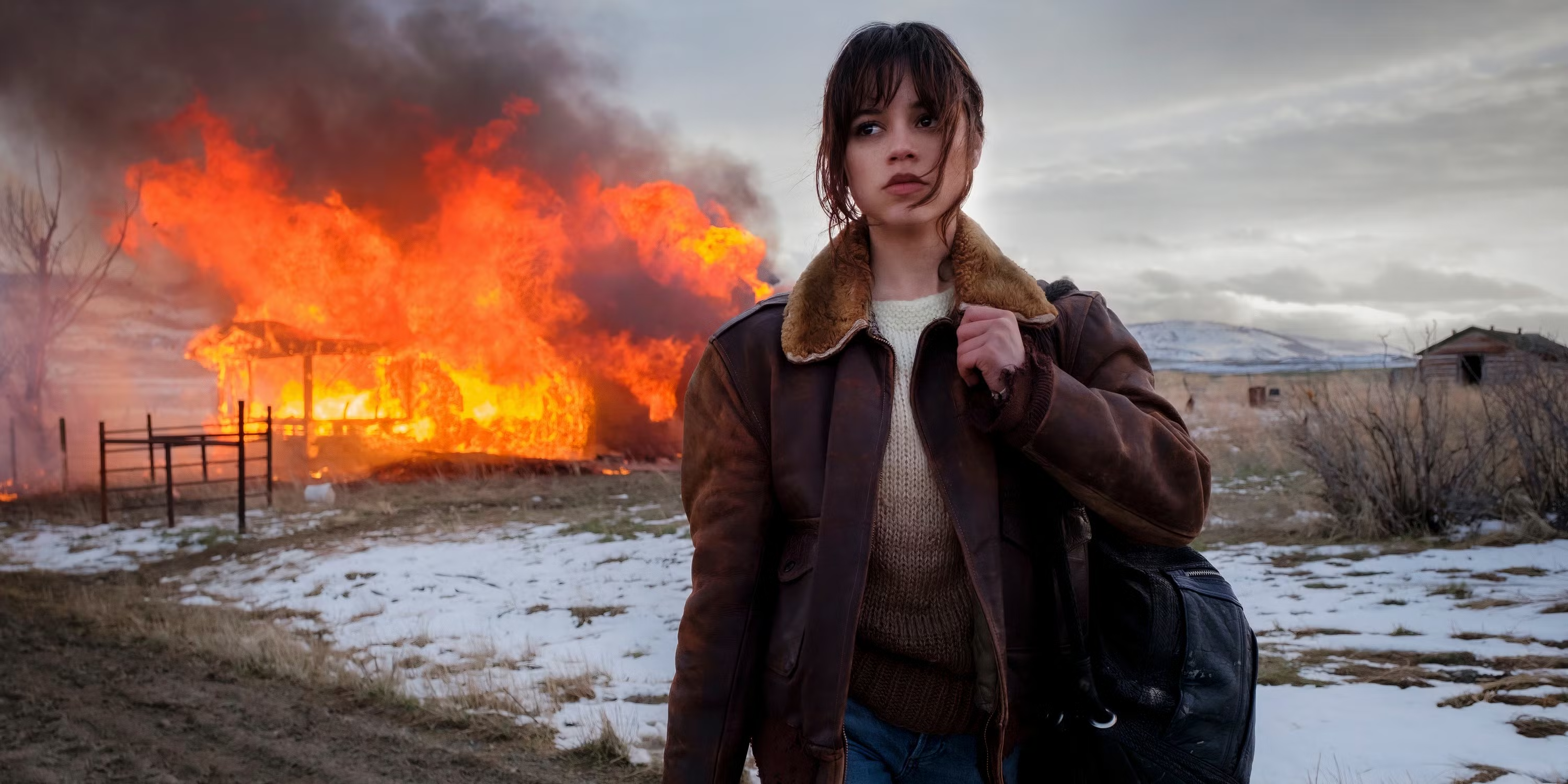
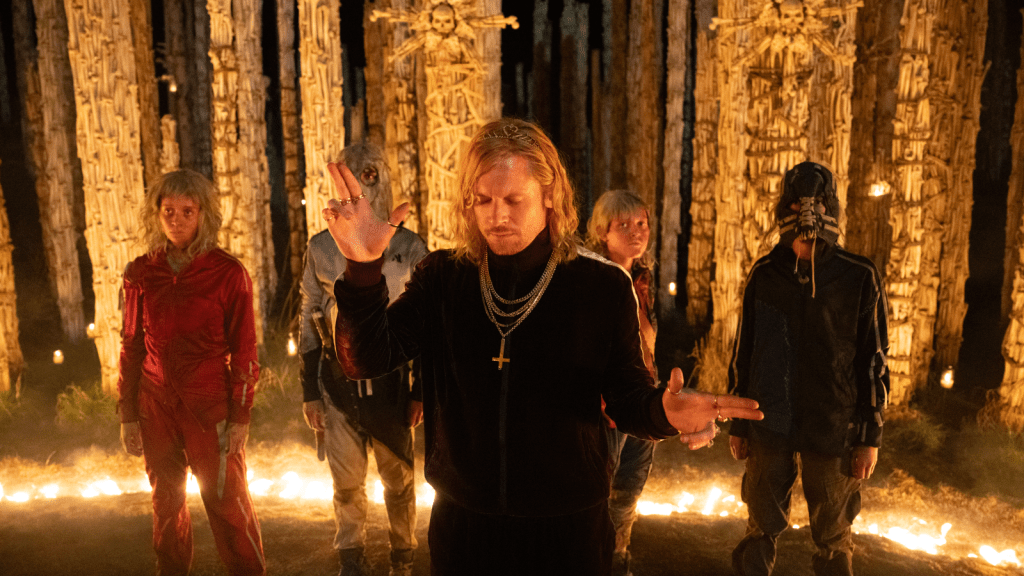
It’s a hall of mirrors and die-hard fans (XO) are loving it. The movie is full of callbacks to his music, nods to ex-lovers and cameos by figures he’s name-checked in lyrics. It’s a companion film to his latest album and a breakup letter to the persona he built. Put simply, there’s a lot going on here.
While fans are devouring this Easter egg-filled vanity project, casual viewers are left blinking slowly at the screen and laughing at inappropriate times, unsure how to interpret the plot, tone or the pop star at the heart of the story.
And I think I cracked why. As his fictional self, Tesfaye comes off… a little too normal. He’s miles away from the mysterious, dangerous figure fans associate with The Weeknd. The film wants us to feel the weight of his transformation, but many viewers are stuck on the disconnect.
Is this really the same guy who once sang “I ran out of tears when I was eighteen” over horror-movie synths? It is. But his subdued performance is throwing people off, and his “normie” energy on screen is being mistaken for bad acting, mostly because it clashes so hard with the persona he’s trying to leave behind
TBH, I had no idea The Weeknd was a full-on persona, like Gaga. I thought he was just a guy who made moody breakup music and cinematic music videos. Turns out, there was a whole elaborate schtick behind it.
That dissonance between myth and man has tripped him up before. His turn in The Idol was panned, mostly for its stiff delivery and faux menace. The memeification of his acting has made it harder for audiences to take his serious onscreen efforts at face value. And it’s happening again, this time with a scene where he curses out Anima for lashing out at him after their one-night stand.
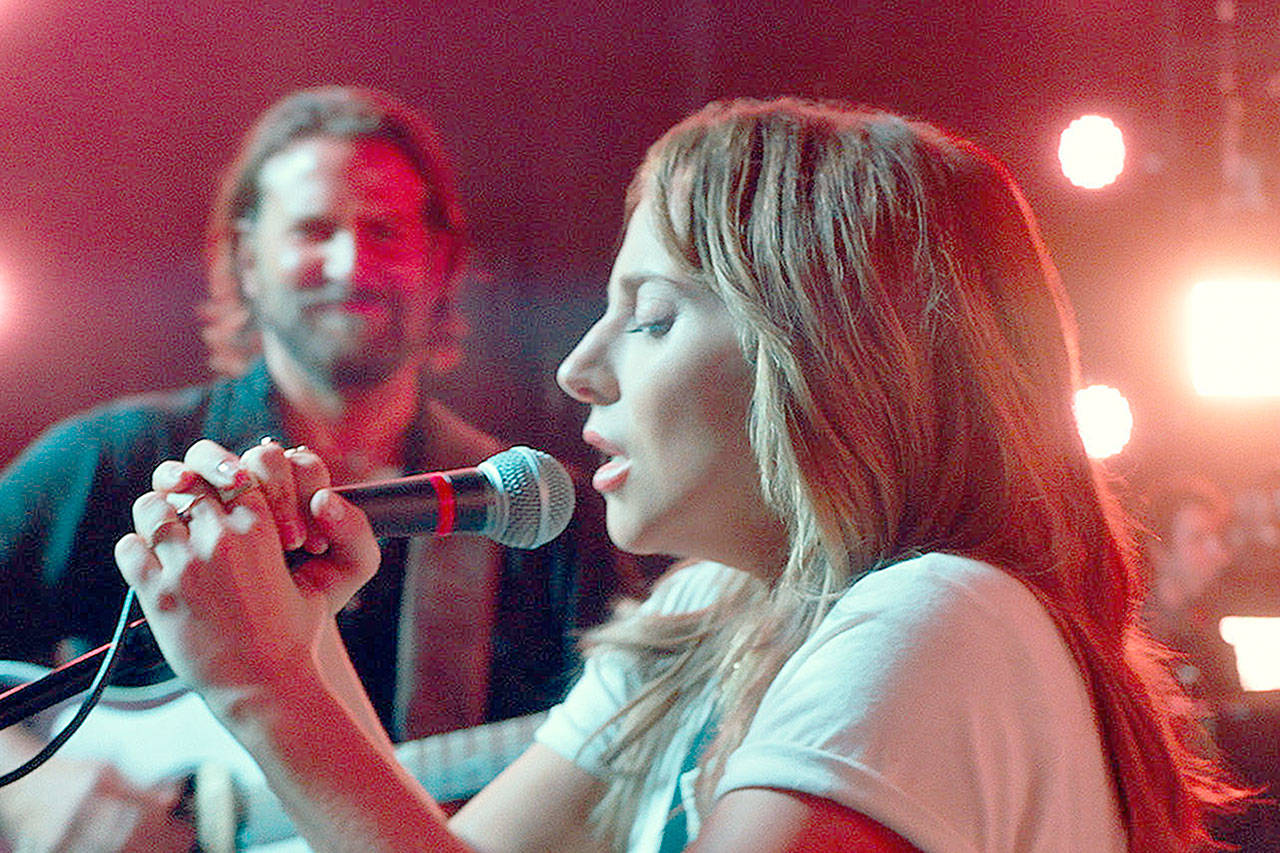
It’s a pretty sharp contrast to Lady Gaga, who, like Tesfaye, spent years building an elaborate pop persona full of theatrical, stylized performances. But in A Star Is Born, she made the deliberate choice to strip it all away. No costumes, no masks, no abstract metaphors. Just her voice and a character quietly unraveling under the weight of ambition. That role worked because it subtracted from her mythos.
But in Joker: Folie à Deux, she swings in the opposite direction, playing Harley Quinn in a musical psychodrama that seems to parallel her stage persona instead of reshaping it, and the reception was not as warm for that performance.
That’s the line of criticism both she and Tesfaye will likely keep facing in their acting careers: when your stage identity is already so cinematic and distinct, can it elevate a role or make it harder to disappear into one?
This brings us to Purple Rain, the prototype and the exception that proves the rule.
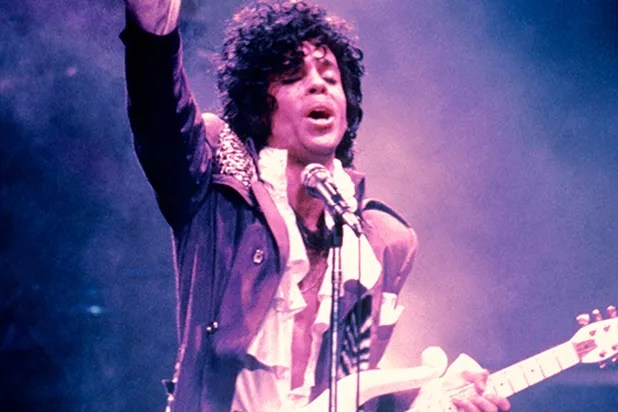
Prince, like Tesfaye, played a fictionalized version of himself. But he didn’t try to tone anything down. He amped it up. The film was pure pop melodrama. Ego, pain, jealousy, redemption, with just enough narrative to hang his musical performances on.
And it worked because Prince asked to be seen as immortal. And audiences bought in. The movie transcended its genre and promotional intent, ultimately coming to define this niche film genre. An artist at his peak, showing exactly who he was. Not the man behind the mask, but the mask as the message.
Tesfaye isn’t there yet. His mythos hasn’t fully penetrated across generations, and so his effort to “retire” The Weeknd through film reads less like evolution and more like confusion to the average viewer.
For core fans, Hurry Up Tomorrow is a satisfying, referential work of self-therapy. For many viewers, it’s an indulgent goodbye to a persona they didn’t realize was ending.
So the big question is: Will the world embrace Abel, the actor?
Or is The Weeknd too good a role to let go of?
 Danger Bowie
Leave a comment