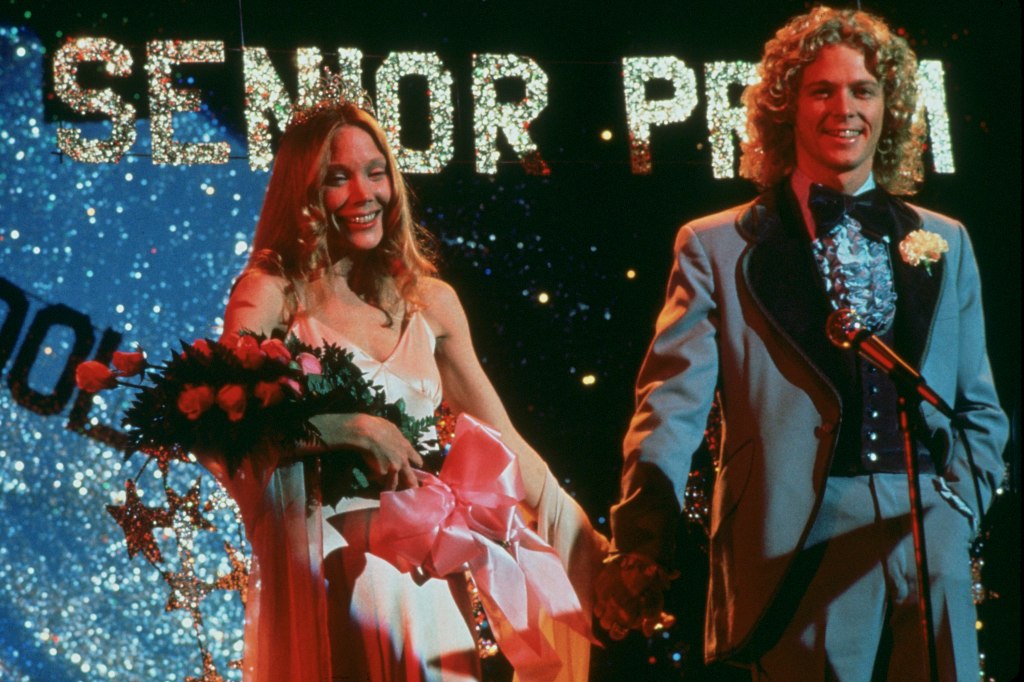
On Sunday, May 25, while dads and uncles across the country were prepping for their annual Memorial Day barbecues, the last family-owned single-screen theater in Los Angeles was hosting something far more exciting: a prom-themed screening of one of the most iconic Stephen King adaptations of all time, Brian De Palma’s 1976 horror masterpiece Carrie.

Since this was happening at Gardena Cinema, a historic venue built in 1946, it felt like a fitting setting to revisit a film that still resonates nearly 50 years after its release.
The theater’s modest lobby was transformed for the occasion into a festive horror-themed space.

Vendor tables offered up themed merchandise ranging from buttons and zines to horror prints, corsages and heart-shaped Carrie cakes.
Guests posed at a photo booth decked out like prom night gone wrong, some arriving in costume, including a few brave souls in blood-soaked prom dresses.
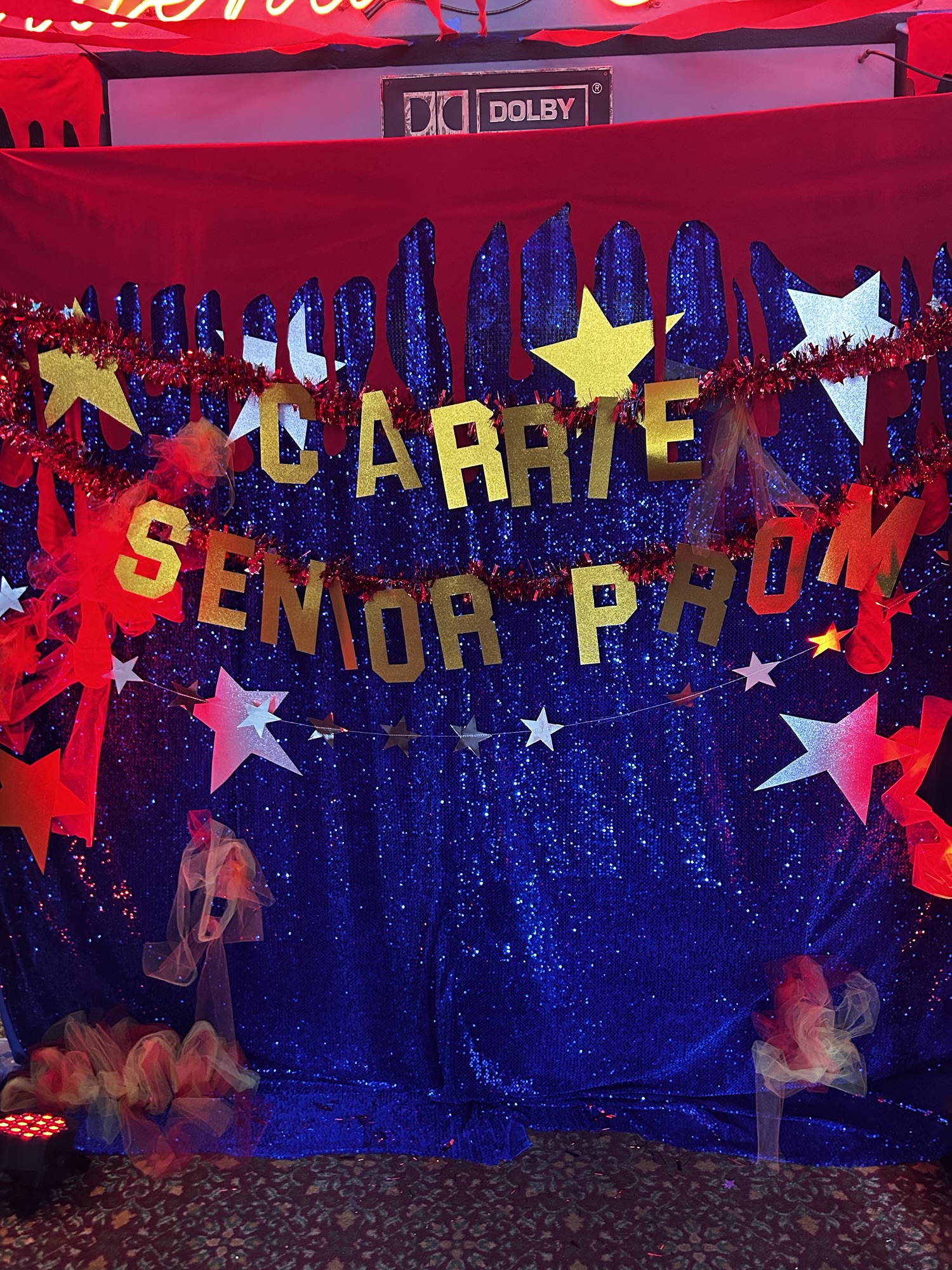
Fan Mail Cinema Club, the host of the event, provided free zines packed with horror trivia. One fact that stood out: “Women often make up the majority of horror audiences.”
This feels particularly relevant when revisiting Carrie, a story that takes the emotional landscape of girlhood seriously, even as it explodes into supernatural chaos.

The film opens with a soft-focus locker room scene that still feels deliberately provocative by today’s standards. But behind the aesthetic choices is a much deeper horror: Carrie White, a shy, isolated high schooler, experiences her first period in front of her classmates, only to be mocked and shamed for it. Unaware of what is happening to her, she panics. Her classmates respond with abject cruelty as she sobs for help.
What becomes even more shocking on rewatch is the realization that no one ever told her what a period was. Carrie’s mother, a religious zealot, has withheld even the most basic education about her own body. And her school, it seems, has done no better. Why not send her to the school nurse for further explanation? Carrie has no frame of reference for what is happening to her. And because of that, she is publicly humiliated for something entirely normal.
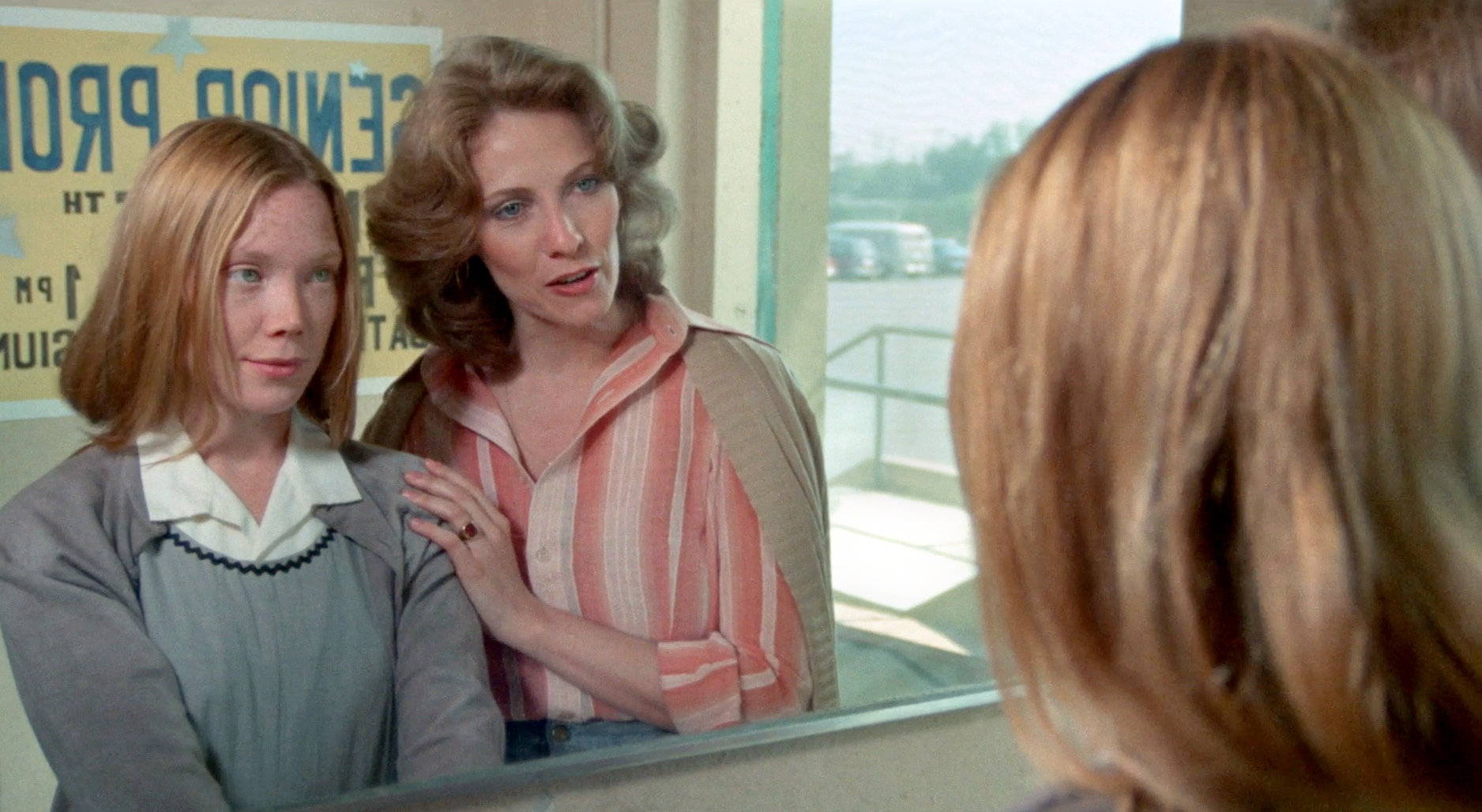
This lack of education sets the stage for everything that follows. While Carrie is known for its iconic telekinetic bloodbath, it is grounded in the quieter horror of repression and emotional and physical neglect. Watching the film in 2025, it is impossible not to reflect on ongoing debates about sex education in schools. The fear and shame Carrie feels in that moment are the direct result of silence, and it feels just as relevant today as it did when the film was released in the ’70s.
The violence of the film’s final act has also taken on new weight in recent years. Carrie’s breakdown at prom, a moment of psychic fury unleashed in a high school gymnasium, is difficult to separate from contemporary conversations around school violence.
While researching the film after the screening, one particularly eerie detail jumped out at me: Stephen King’s 1977 novel Rage, written under his Richard Bachman pseudonym, centered on a school shooting and has since been allowed to go out of print. His fiction, more often than not, touches something all too real.

All in all, the Carrie prom fundraiser was more than just a fun themed screening—it was a thoughtful celebration of a film that continues to resonate. Carrie reminds us that horror has always been about more than scares. It reflects cultural anxieties, challenges norms and asks what happens when people, especially young women, are denied agency and compassion. The film remains iconic for its explosive finale and the quiet tragedies that precede it.
Next up at Gardena Cinema is a screening of Anora on May 30, followed by a Q&A with director Sean Baker. If you are ever in the South Bay, the theater’s calendar is well worth browsing. From repertory classics to double features and filmmaker events, Gardena Cinema remains a space where film is not just consumed, but thoughtfully experienced. Plus, the parking is free and there’s plenty of it!

 Danger Bowie
Leave a comment