
In Bring Her Back, the trouble starts quietly. A father is found dead, and his children, Andy and Piper, are left behind. Andy, just a few months shy of 18, pleads to stay with Piper, who’s blind, until he’s old enough to file for custody himself.
Eventually, the kids are placed with Laura (Sally Hawkins), a former caseworker whose own daughter died years earlier. Laura is fragile but seemingly kind.

She lives out in the middle of nowhere with her 10-year-old nephew, Oliver, who doesn’t speak or engage with anyone. As the kids settle into their new environment, Andy starts to notice that things are a bit off in the house, and Laura may have ulterior motives.
It’s the casting that really sells the horror of the situation. Hawkins, known for her tender and charming performances in films like Paddington and The Shape of Water, plays someone you’re unsure you can trust, which keeps you on edge. She’s the last person you’d suspect—and that’s the point.
Casting against type can be a gimmick, sure. But when it works, it’s impactful. It forces you to question what you think you know about the story, about the character, about the actor themselves. Bring Her Back does it beautifully. And it’s not alone.
Here’s a look at some other actors who’ve turned their most beloved personas inside out.
Hugh Grant — from Notting Hill to The Heretic

Hugh Grant practically invented the charming, bumbling romantic lead in films like Four Weddings and a Funeral, Love Actually and Notting Hill. His posh RP accent and self-deprecating manner made him the quintessential British heartthrob for an entire generation of rom-com lovers.
But in recent years, casting directors have weaponized that charm by slotting him into more villainous roles, like the greedy, unreliable PI in The Gentlemen or the washed-up thief in Paddington 2.
But his performance in A24’s The Heretic is the biggest heel turn of his career. Playing a gleefully manipulative spiritual leader with a god complex, Grant sheds every trace of likability. His signature charm becomes a mask for control and menace. And it’s all the more disturbing because we know just how warm he can be, whether he’s wooing Julia Roberts in a travel bookshop or wooing a member of his staff(😬) during Christmastime.
Mo’Nique — from The Parkers to Precious

Before Precious, Mo’Nique was known as a comedian and sitcom star — loud, funny, warm and irreverent. She was a confident, no-nonsense woman audiences rooted for, whether on stage or in shows like The Parkers.
Her portrayal of Mary, an abusive and manipulative mother in the devastating drama Precious, was revelatory. Her performance was so raw and unsettling that it shattered any preconceived notions about Mo’Nique as a performer and earned her a much-deserved Oscar.
“When you watch it and you understand, through it all, somebody can pick themselves up and keep it moving, that’s beautiful,” she told AP. “So I was proud to be a part of something that is very honest, and Lee Daniels, baby, he’s going to give it to you. He’s going to give it to you raw. No chaser, no lollipop licking, this is it. It’s the dirt, it’s the grime, it’s what we’re afraid of.”
Albert Brooks — from Broadcast News to Drive
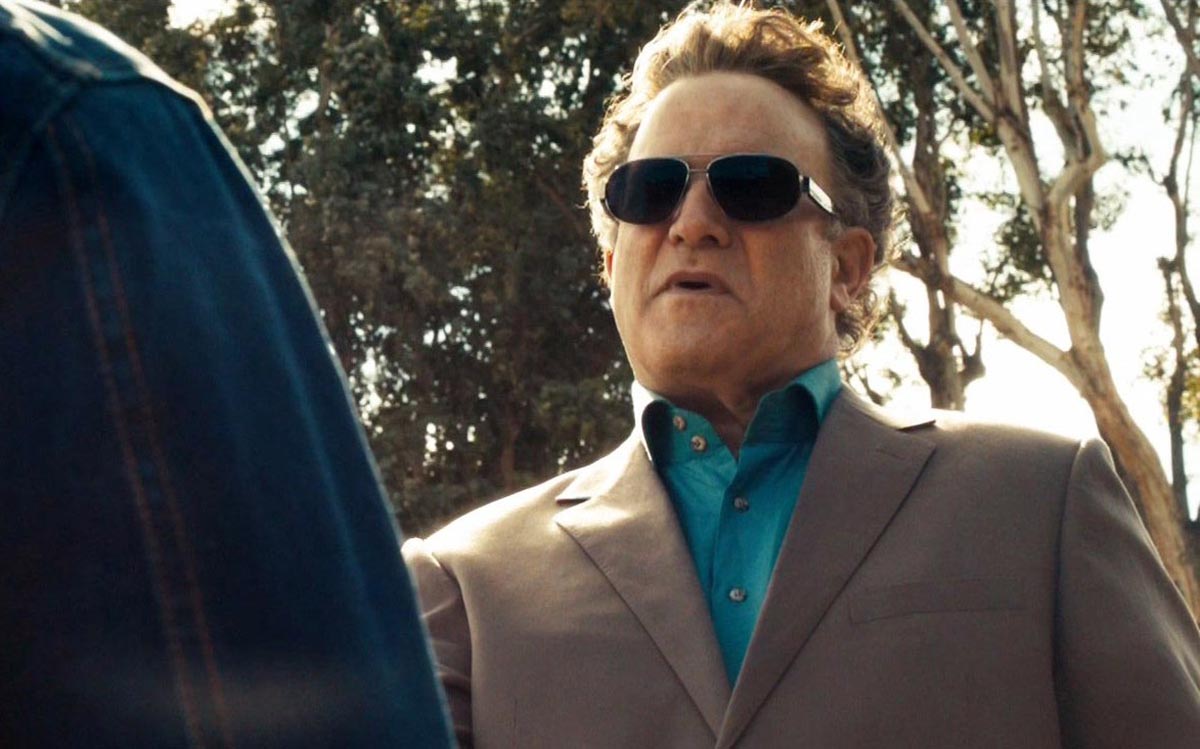
Albert Brooks built a career on vulnerability and wit, often portraying neurotic yet lovable men trying to figure out how to work through contentious relationships . In Broadcast News, he’s the intelligent underdog and, in his own comedies, like Lost in America, he’s a fast-talking everyman.
But in 2011, we were introduced to a very different Brooks. In Nicolas Winding Refn’s Drive, the former stand-up plays a crime boss who smiles as he kills (literally). His easygoing cadence and fatherly demeanor make the violence even more terrifying. Brooks doesn’t growl or shout or wield a gun. He simply delivers death with calm precision.
He told Collider how he wound up going toe to toe with peak Gosling: “Drive came to me because the casting director knew my manager and called and said, ‘You’ve always talked to me about Albert wanting to play the heavy. I think he should read this.’ My ears just perked up. It was a chance… if I hadn’t done something for a few years, it was a chance to at least come back in, in a whole different way. That made me excited, so I took it.”
Denzel Washington — from Malcolm X to Training Day

Malcolm X. Rubin Carter. Private Trip. Long before he was plotting on The Stranger Things dude in Gladiator II or getting schemed on by Jake Gyllenhaal’s Iago on Broadway, Denzel Washington made a career of playing characters who fought against the odds with dignity and purpose.
Then came Training Day. As Alonzo Harris, a corrupt narcotics detective, Washington flipped his own legend on its head. He used his charisma like a weapon, luring both his rookie partner and the audience into complicity. The role was originally written for a white actor, but once Antoine Fuqua signed on to direct, he reimagined the character and the result was historic.
“It’s a huge honour and privilege to play real-life heroes, but there is a different kind of excitement and reward for an actor in playing a villain,” Washington said. “I’ve done 30 pictures, and this is the first time I’ve played a truly evil character. It’s not for want of trying. It’s just that no one has ever asked me to play a bad guy before. That’s not how Hollywood perceives me.”
Patrick Stewart — from Star Trek to Green Room

Sir Patrick Stewart is best known for playing Captain Jean-Luc Picard in Star Trek: The Next Generation, a character defined by diplomacy and moral clarity. He also brought gravitas to the Fox X-Men franchise as Professor X, another gentle leader committed to peace.
In Green Room, a severely underrated A24 thriller, Stewart plays the soft-spoken leader of a neo-Nazi compound in Oregon. He strips away every trace of moral weight he’s known for, replacing it with calculated, hate-fueled coldness. It’s a performance that works precisely because it feels so wrong coming from someone we’ve been conditioned to trust.
“This is not the first bad guy I’ve played, and yet, there was something about the tonality of [Green Room villain] Darcy Banker that drew me to it, “
Stewart told Vice. “There was something pragmatic, practical, logical, and rational about him. Something extraordinarily calm, given the situation that his business was in, that I found very appealing and interesting.”



 Danger Bowie
Leave a comment