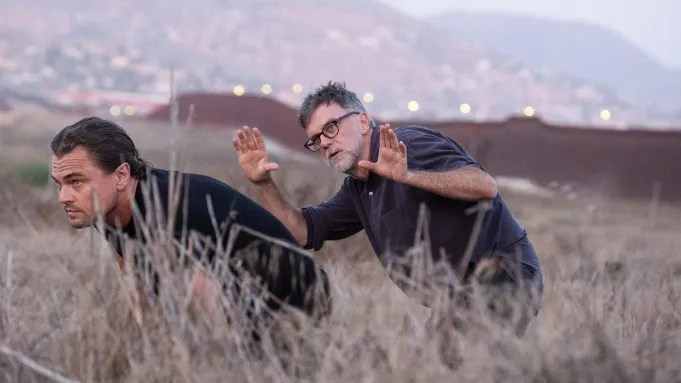
What if the foundation of Paul Thomas Anderson’s latest masterpiece is the multitalented icon he shares a home and four kids with?
One Battle After Another takes Thomas Pynchon’s Vineland and spins it into a modern-day stoner odyssey about broken systems and the high price marginalized citizens pay for resisting them or even just living inside of them.
(Light spoilers ahead!)
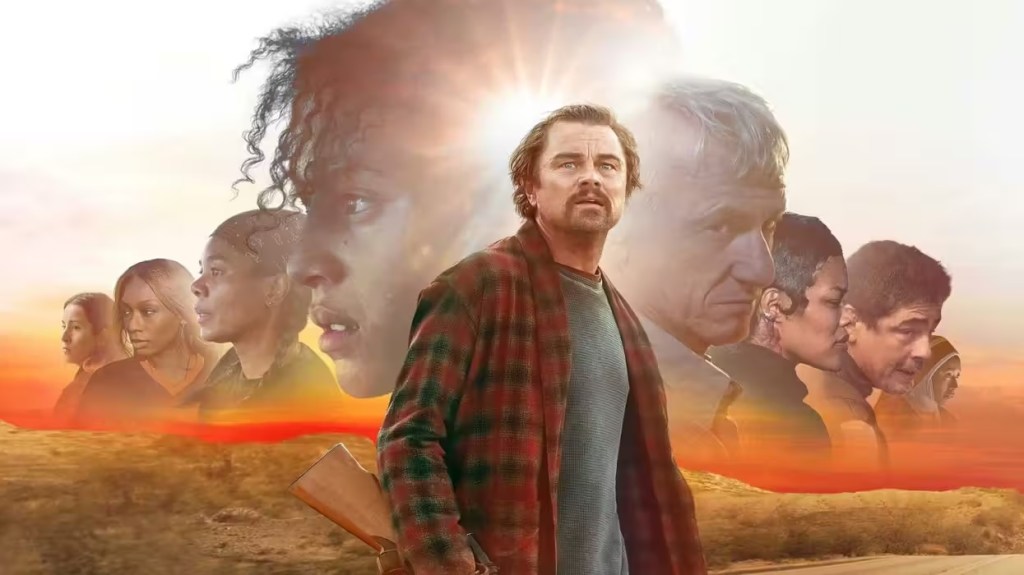
In the film, Leonardo DiCaprio plays a washed-up ex-revolutionary once known as “Ghetto Pat,” now hiding out under the alias Bob Ferguson in a sanctuary city in NorCal. He’s a burnout single dad trying, and mostly failing, to parent Willa (Chase Infiniti), his hyper-independent daughter who is basically raising herself.
Her mother, Perfidia Beverly Hills (a dynamic Teyana Taylor), has peaced out to sow her radical oats. Their fragile lil’ bubble bursts when a bulldog military officer from Bob’s past (a terrifying Sean Penn) comes back determined to take them both down.

Critics are already calling this the best film of Anderson’s career, and that’s partly due to his wife, Maya Rudolph: comedian, writer, actor, expert Beyoncé impressionist and the muse behind my favorite PTA film, Phantom Thread.
When One Battle After Another threads matriarchy and cultural inheritance into its plot, you can practically feel Rudolph’s fingerprints on the story, even if her name only shows up in the special thanks portion of the credits.
Allow me to make my case and highlight some other cool details I uncovered about the film during my research sesh.
1. A Nod to Maya’s Mama

Perfidia Beverly Hills, mother of Willa and former lover of Bob, is tethered to the story by her own mom, “Gramma Minnie,” played by Starletta DuPois. (Yes, the same Starletta who gifted us the immortal Waiting to Exhale line: “He’s a good man, Savannah.” A banger then, a meme forever.)
The name is classic and sweet, but it’s not a throwaway. It’s a direct nod to Maya Rudolph’s mother, singer Minnie Riperton, who died at 31 after a three-year battle with breast cancer and never reached grandmotherhood. Through this film, she does.
That sense of absence runs deep. Willa loses both grandmother and mother in infancy, and Perfidia parts from her own mom too soon. Each woman is marked by the loss of the one before her.
Teyana Taylor, who plays Perfidia, even said she immersed herself in Riperton’s discography to find the character’s pulse during the film’s long shoot.
2. Bob’s Revelation About Willa’s Hair

The film’s most vulnerable scene traces directly back to Rudolph’s family. Riding through the desert with Benicio del Toro’s Sensei Sergio, Bob admits he felt powerless as a father after Perfidia left. Then he admits that he doesn’t know how to do his daughter’s hair.
That line came straight from Maya’s father, Richard Rudolph, a white producer-composer who once shared that struggle with Anderson, his son-in-law. PTA told Rolling Stone: “Maya lost her mother when she was very young. Her dad really struggled, as a single white father, to do her hair. As a father of mixed-race girls myself, I know how nearly impossible that can be. That was something that struck me as a father, and that I really knew was a challenge for her and for him. That’s a very personal line for me.”
When asked about the characterization of Willa and if he was inspired by today’s young women of color, Anderson told Dazed, “I must be, because I live in a house full of them.” Which explains why finding the exact right actress to play Willa was so important. “Without getting all Californian about it, she is the hero of the movie. I put so much pressure on finding the right actor because of who I live with, and what I’m surrounded with. Finding her [Chase Infiniti] was one of the lucky breaks I’ve had in the movie business.”
3. Casting Willa
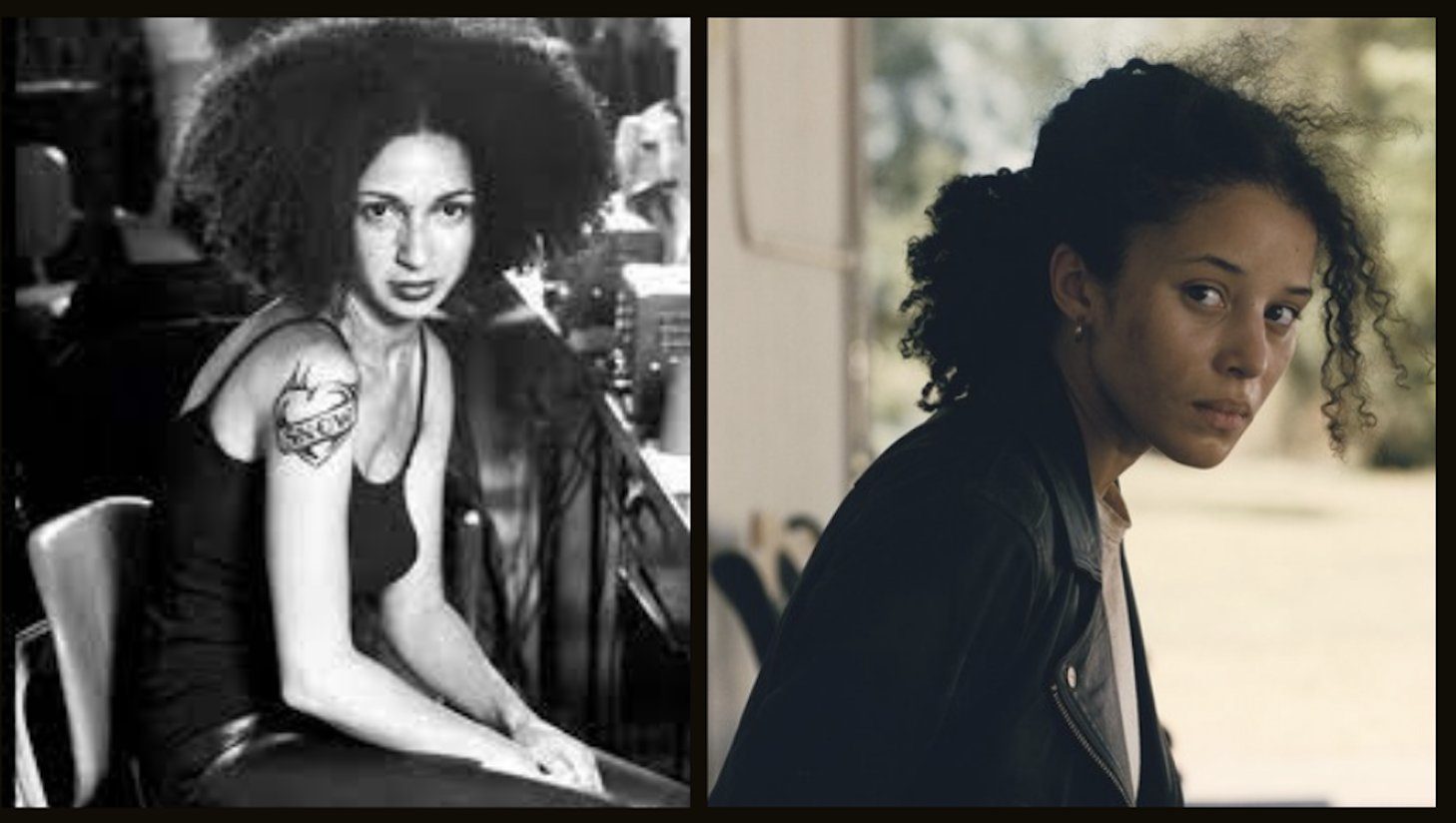
Even Willa’s casting carries Maya’s imprint. Check out the photos above of a young Maya Rudolph and Chase Infiniti (Willa), and the parallels aren’t exactly subtle.
Anderson told Rolling Stone that after a long search, Chase clicked because “she reminded me of my daughters… someone who would be friends with my daughters.” He also praised her talent and emotional depth, but more than anything, he just wanted to spend a year working alongside her.
And the family fingerprints don’t stop there. On your next rewatch, peek at the photos in Bob and Willa’s sanctuary home, and you’ll spot Anderson’s own kids. Production designer Florencia Martin told Variety: “We had a lot of artwork from Paul’s kids and our set decorator, Anthony Carlino, and Willa (Chase Infiniti) gave us her photos of when she was a baby. We made certificates from elementary school and middle school. And she has all her karate trophies. And the calendar from Sensei, which becomes a clue of trying to find her.”
4. Notable Faces Among the Weed-Growing Nuns

You could build a whole movie around the weed nuns in the film’s third act, but did you know they are based on a real collective of non-religious activist nuns of the Central Valley who grow and sell plant-based medicine? They’re called the Sisters of the Valley, and their mission is to heal the world with their handmade products.
And eight of the actual Sisters of the Valley appear in the film during this sequence, joined by two other familiar faces from the PTA Cinematic Universe: Maya and Paul’s daughter, Pearl Minnie, who plays Sister Coco, and April Grace, who plays Sister Rochelle.
Pearl Minnie, whose second name honors Maya’s mom, also popped up in Licorice Pizza as “Sharon.” April Grace is a phenomenal and prolific actor with over 100 credits, including the kickass interviewer Gwenovier, who goes up against Tom Cruise in Magnolia.
5. Benicio Cooked Up the New Underground Railroad Idea

Sensei Sergio St. Carlos (what a name!) is one of the film’s standouts (right up there with Perfidia Beverly Hills), thanks to Benicio del Toro’s scene-stealing performance. But, arguably, his biggest contribution to the project was an idea inspired by one of the most powerful symbols of resistance in our history.
In an interview with ScreenRant, Del Toro and DiCaprio discussed the concept and its origins. Production paused for months so Del Toro could shoot Wes Anderson’s Phoenician Scheme, and he came to set with a fully realized Sensei and a pitch: What if his character built a network to assist the local immigrants in escaping capture, modeled on Harriet Tubman’s?
Casting director Cassandra Kulukundis helped bring that vision to life by filling the sequence with real people: nurses playing nurses and other non-actors playing members of Del Toro’s family and the local community. The result is one of the most thrilling sequences in the film.
6. Perfidia’s Betrayal Is in Her Name
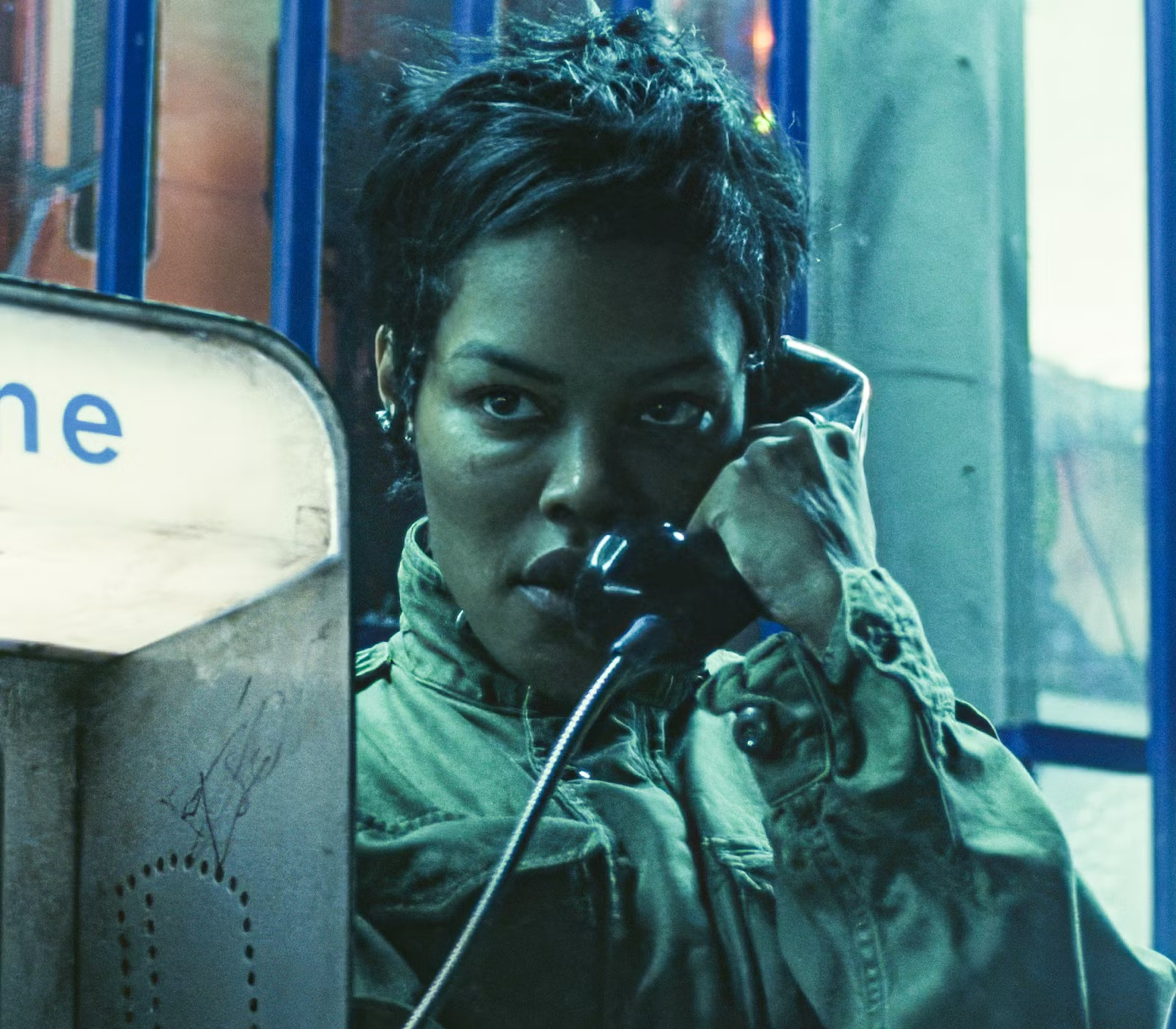
Ms. Perfidia Beverly Hills, flawed antiheroine and revolutionary, haunts Bob, Lockjaw, Willa and the remaining members of the French 75 long after she leaves the screen. Postpartum depression pushes her to walk away from her young daughter and boyfriend so she can throw herself back into radical work.
When everything collapses, she commits a betrayal that feels almost mythic, and the clues are in her name. If you love five-dollar words or still twitch at SAT vocab, you know “perfidy” means faithlessness, betrayal, and disloyalty. Ms. Merriam Webster practically spoiled the twist.
Anderson’s spin on her name heightens Pynchon’s original. In Vineland, the character was named Frenzia, which comes from the Spanish word for “frenzy.” Here she becomes Perfidia. The name also belongs to a classic bolero, recorded by Los Panchos, which plays in the film itself. A love song about heartbreak and disloyalty becomes a soundtrack for a character whose very name promises both.
7. The Interrogator Who Feels Too Real—Because He’s Pulling From Real Life
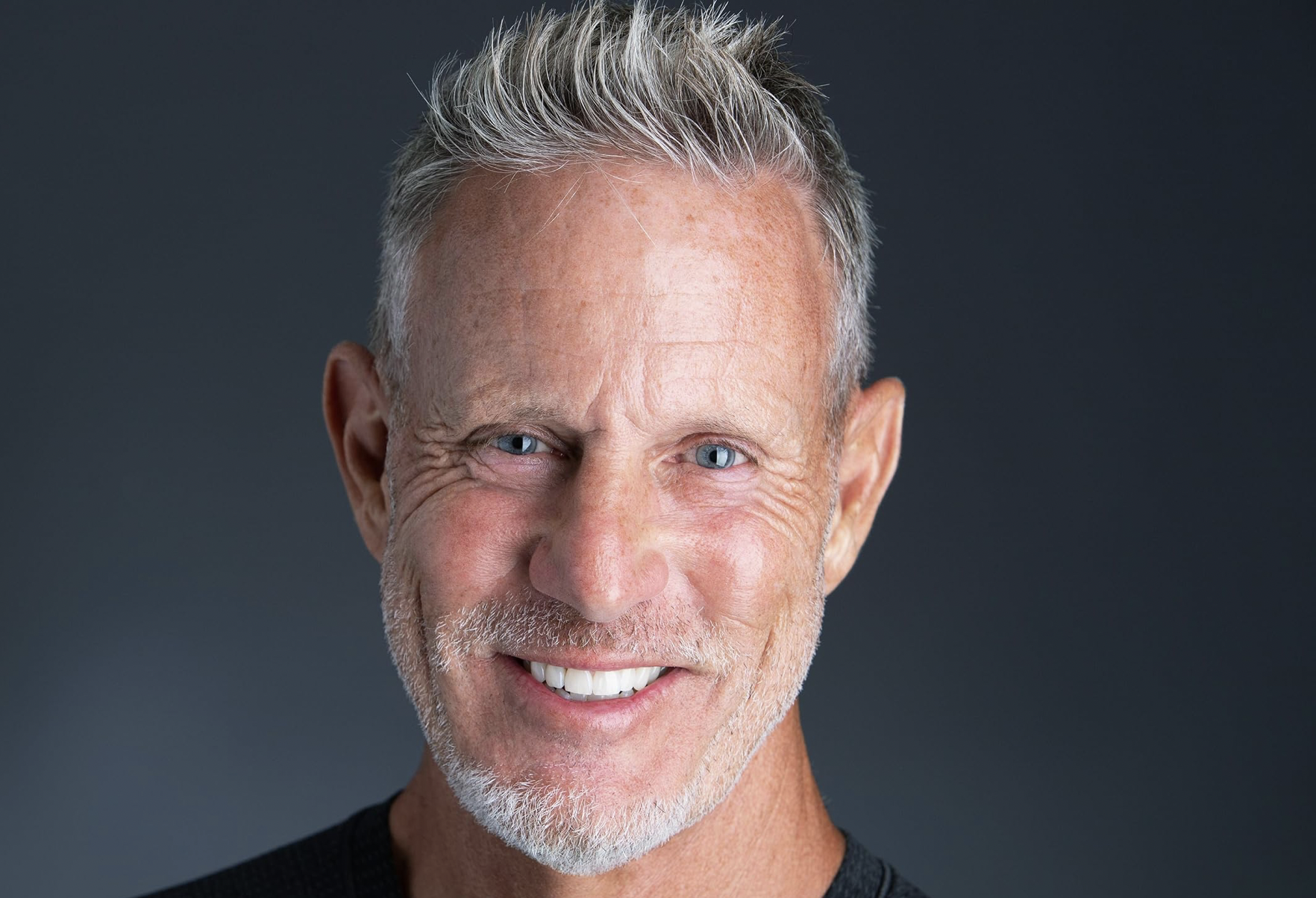
When Lockjaw needs to track down Bob and Willa, he sends in his number two, Danvers, to interrogate Willa’s friends and a couple of the remaining members of the French 75. The scene-stealing performance is unnervingly grounded, the kind that makes you shift in your seat because it feels a little too real.
That’s because the man who plays Danvers, James Raterman, isn’t a career actor at all. He spent decades in law enforcement before stepping into this role, and the authority and menace he brings feel all too authentic. It’s one of those casting choices that makes OBAA click into place.
8. The First Shot of the Film: A Bonkers Parent-Teacher Conference
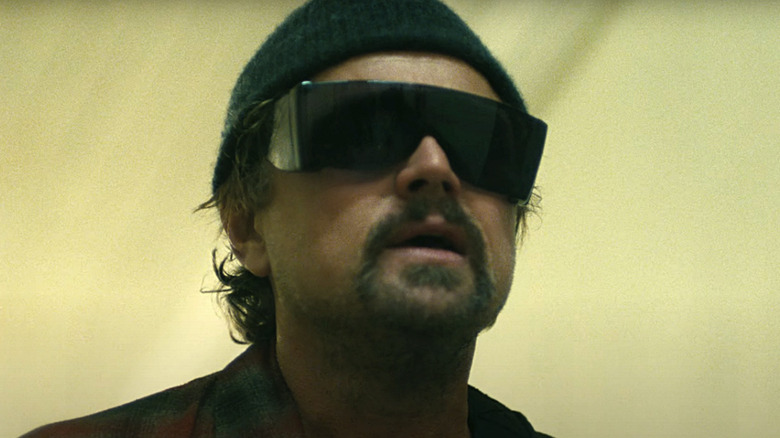
When building out a nearly 3-hour film, where do you start? Well, for OBAA, it all started with a weed-infused parent-teacher conference that would make Cheech and Chong proud.
PTA said in a recent interview:”It’s one thing when you kind of talk about making a movie, but then when you do it, when you get there on the first day—the first scene we shot was of Bob, stoned, talking to Willa’s teacher—within like five minutes I remember thinking this is going to be a very exciting 100 days.
DiCaprio said of his OBAA character: “Bob is what I like to call a don’t tread on me, anti-establishment, hippie revolutionary who is paranoid about anything and everything. He doesn’t want to be taxed. He doesn’t want to be monitored. He’s incredibly skeptical of everyone and everything around him. He hides himself off in the middle of the woods and stays home, watches movies like The Battle of Algiers, smokes pot and drinks, but has one objective, and that’s to protect his daughter.”
9. Lockjaw Receives a Medal of Honor Named After a Confederate General
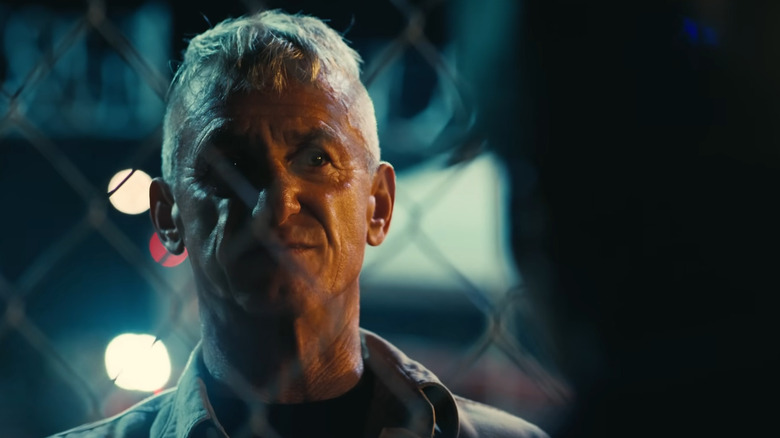
The Medal of Honor is the highest decoration an American service member can receive, presented by the president in the name of Congress. While these things are subject to change… the medal is currently not named after any historical figure.
In One Battle After Another, Colonel Steven Lockjaw (Sean Penn) is decorated with the Bedford Forrest Medal of Honor for hunting down most of the members of the French 75, the radical activist collective at the heart of the story.
But who is the medal named after in OBAA? None other than Nathaniel Bedford Forrest, a Confederate general, trader of enslaved people and the first Grand Wizard of the KKK. It turns the moment of glory into a nod at the history America hasn’t fully confronted.
And if the name rings a bell aside from that, it’s because Forrest also gets a nod in Forrest Gump, where Tom Hanks’ title character is revealed to be his fictional descendant.
10. The Origins of the Story
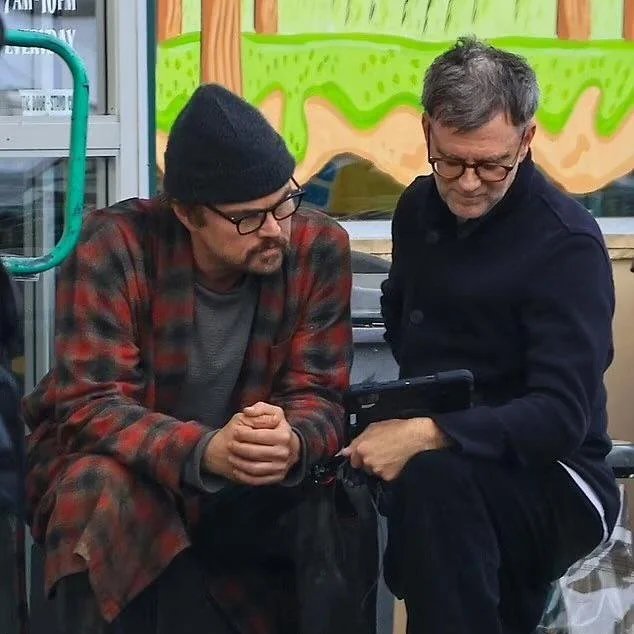
One Battle After Another wears its influences on its sleeve: Midnight Run, The French Connection, Running on Empty, The Battle of Algiers, The Searchers and Wong Kar-wai’s visually delicious In the Mood for Love and Chungking Express. PTA throws the grit of 1970s crime thrillers against the melancholy of Hong Kong romance, and creates his own soul-satisfying cinematic stew.
He first sketched the idea 20 years ago, imagining an action-adventure in the desert but missing the premise to anchor it. According to Dazed, he merged three separate concepts: a bounty hunter who works for the wrong people until he decides he’s done (Eric Schweig‘s Avanti in the film), a young female activist finding her voice and an early attempt to adapt Thomas Pynchon’s Vineland.(The final screenplay carries the “inspired by” tag.)
When Anderson finally sat down with Pynchon’s 1990 novel, he resonated with the core premise: “What happens when revolutionaries scatter and one of them ends up in the NorCal woods with a daughter to raise and the past comes back to haunt them?” That question became the spine of One Battle After Another, one of my favorite films of the year.

 Danger Bowie
Leave a comment